You can download a PDF of this study: Examine Yourselves! – PDF
You can also download and listen to an Audio of this study: Examine Yourselves! – Spotify Podcast
A brief excerpt of the study: In the church the concept of examining ourselves is almost treated as something that is taboo, as if we are trying to kick the legs out from under believers. For which reason the Church has taken the approach to let the sleeping dogs lie, lest we be accused of fear mongering. It is far better to supplicate people than to challenge them to take their salvation seriously. It is far easier to apply the label than it is to examine the content. We are living in the closing moments of the present age, and as much as there are many in the world that need to receive the Gospel of Christ, it is also imperative for us to examine the household that none may fall short of the Grace of God. Scripture reminds us of this fact in relation to the foolish virgins, the church of Laodiceans, and many others that were blindsided at the closing moments of the age, all because they failed to correctly assess their situations. There is assurance that comes from men, however what the Church needs is the assurance that comes from God.
We will begin with a prayer: We thank you, Lord, for this opportunity, our prayer is for your word to go out in the power of your Spirit so that it might bring repentance to the knowledge of the truth to those who hear, we pray this in the name of the Lord Jesus Christ. Amen.
The main text of our study is from Romans 8 verses 3 to 4, which reads, “For of the Law being powerless in that it was weak through the flesh, God, having sent His Son in likeness of Sin of flesh and for sin, condemned Sin in the flesh, so that the Righteousness of the Law should be fulfilled in us not walking according to the flesh, but according to the Spirit.”
We begin our study by asking a question which many of us have taken for granted, that is the question of, what is it that makes a Christian? The common answer is that those that believe the Lord Jesus Christ is the Son of God, who died for the sins of the world and was raised back to life, which is according to the basic definition Paul gave of the Gospel of Christ. However, Paul gave this definition with a condition, saying, “The gospel that I proclaimed to you, which also you received, in which you also stand, by which you are also being saved, if you hold fast to the word I proclaimed to you; otherwise you have believed in vain.” 1 Corinthians 15 verses 2 to 3. He first describes the moment they received the truth of the Gospel, which he then follows with a present active reality that works in them, all based on the condition they hold fast to the truth. And finally he exhorts them of the consequence of failing to do so, that their faith would indeed be in vain. Now the question is: How could faith be in vain to the one that stood and confessed the truth of Christ, which according to modern Christianity is an impossibility. However, Paul gave this condition on the case that the manner we practiced our faith does not quite hold up to the reality of the truth of the Gospel of Christ.
Meaning, there are many ways a believer can be detracted away from the way of truth, as he said to the Ephesians, “So that no longer we might be infants, being tossed by waves and being carried about by every wind of teaching in the cunning, in the craftiness of men with a view to the scheming of deceit.” Ephesians 4 verse 14. Having said this, all the paths that lead away from the truth of the Gospel of Christ always lead to the flesh, and are distinguished by the clear lack of the presence of the Holy Spirit. We struggle to stamp out fires, trying to get hold of a concept that neatly explains to us the variety of distractions that are creeping into the Church, be it Law or our understanding of Grace, without first identifying the essential root problem. That is, those who seek to be under Law in order to justify themselves by earning their way to God, and those who seek to propagate the desires of their flesh under the guise of the Grace of God, suffer from the same problem. The problem that plagues Christianity is the practice of faith in the flesh, and not of the Spirit.
And this phenomena is not new, it is the same problem the early Christians had to contend with, and it will continue to be to the very end of this age. The central issue has to do with our lack of understanding that has to do with the death of flesh upon the Cross of Christ, for which reason we wonder if one can be a practicing homosexual and still be a Christian, or we bind ourselves with all manner of fleshly rituals and laws, and call it practicing faith. The basic essence which we fail to grasp is that, how can we, who died with Christ, still identify ourselves according to our old sinful nature, or seek to practice faith as if we are still in the flesh. We have become experts at choosing terms that uphold what we want, and discard what contradicts it. As Paul warns saying, “For there will be a time when they will not endure sound teaching, but according to [their] own desires, having an itching ear, they will gather around them teachers to suit themselves.” 2 Timothy 4 verse 3. Our doctrine can not pick and choose, it either has to adhere to the whole truth of the Gospel of God, or it leaves us open to all manners of deception.
Paul asked, “For where jealousy and strife are among you, are you not fleshly, and are walking according to man? For when one might say, “I indeed am of Paul,” but another, “I of Apollos,” are you not fleshly?” 1 Corinthians 3 verses 3 to 4. This statement is used to illustrate to us our tendency to be tribal, which is an aspect of being in the flesh. The consequence of which is that we become blind to the truth of God, mindlessly conforming ourselves to the mantra of our tribe. As a result when we encounter any truth that seems to contradict or brings any slight to our tribe, our response is not to examine the validity of its truth, but to simply lash out in anger. [Acts 7 verses 51 to 58.] Such behaviour is mainly observed among those who practice faith in the flesh, but we would expect Christians being in the Spirit, ought to respond differently to the truth. As James said, “But if you have bitter jealousy and self-interest in your heart, do not boast of it and lie against the truth. This is not the wisdom coming down from above, but is earthly, unspiritual, demonic. For where jealousy and self-interest exist, there will be disorder and every evil thing. But the wisdom from above is indeed first pure, then peaceable, gentle, reasonable, full of mercy and of good fruits, impartial, sincere.” James 3 verses 14 to 17. Truth should not provoke us to anger in order to set ourselves in a battle array, rather bring us to freedom, as the Lord said, “And you will know the truth, and the truth will set you free.” John 8 verse 32. So, James could not conceive how believers could go to war with one another, unless they are in the flesh where reason and peace and gentleness are concepts that are foreign. And when we are in the flesh and think according to the flesh, we by default tend to make ourselves the enemies of God, because the flesh will always oppose the Spirit, and vice versa. [Galatians 4 verse 17.]
We look at the varieties of the denominations of the Christian faith and we think these are the jewels of the kingdom, when they are scars. Sheep being set against sheep, with deep trenches that are built by men as some sort of guard rails, when they are evidence of walls that blinker the sheep from the truth of God. The Psalms in the New King James says, “Yes, again and again they tempted God, and limited the Holy One of Israel.” Psalm 78 verse 41. The question is, how could the infinite God be limited by lowly mankind? The answer is, because our relationship with God is entirely based on faith, as Paul said, “anything that is not of faith is sin.” Romans 14 verse 23. And again, “And without faith, it is impossible to please Him. For it behooves the one drawing near to God to believe that He exists and that He becomes a rewarder to those earnestly seeking Him out.” Hebrews 11 verse 6. Meaning, what we believe will define the boundaries of what we receive from Him. [Mark 6 verses 5 to 6.] Therefore, the boundaries that are set by our denomination will define what God can, or will not do for us. So, when we say, “God no longer heals, or delivers,” this becomes a self-fulfilling prophecy, as John said, “For the testimony of Jesus is the spirit of prophecy.” Revelation 19 verse 11. Meaning, what we testify about Him, will determine what we will receive from Him.
Having said this, what it means to be a Christian is not defined by any denomination, setting the boundaries of what is permissible or not, or determining the manner faith should be practiced or not. It comes down to one main factor, Paul asked the Corinthians, “Examine yourselves whether you are in the faith; Test yourselves. Or do you Not Recognize yourselves that Jesus Christ is in you, unless you are unapproved?” 2 Corinthians 13 verse 5. Our approval or disapproval as Christians comes down to one factor, that is in the realisation of the truth, if indeed Christ has made His dwelling in us. This is not to say all things are fair game, or that God has not determined the manner we are to worship Him, but rather, these things are a natural byproduct of having been established on the core issue of the faith. Because our understanding of spiritual truth is entirely predicated on the fact Christ has made His dwelling in us, which enables us to worship Him as we ought. [John 4 verses 23 to 24.] Our unity in the body is determined by this truth, as Paul says, “For also in one Spirit we all were baptized into one body, whether Jews or Greeks, whether slaves or free, and we were all made to drink one Spirit.” 1 Corinthians 12 verse 13. Our understanding of the truth of God is determined by this truth, as the Lord stated in John 14 verse 26 and John 16 verse 13. The conduct of the life we are to live in the flesh is also determined by this truth, as Paul stated, “And if the Spirit of the One having raised up Jesus out from the dead dwells in you, the One having raised up Christ Jesus out from the dead also will give life to your mortal bodies, on account of His Spirit dwelling in you.” Romans 8 verse 11. As well as in Galatians 4 verse 16.
Simply put, the Christian faith is entirely founded upon the knowledge of Christ having made His dwelling in our hearts by the Holy Spirit through faith. Meaning, Christianity is not something we can claim to be, but the reality of a new nature that can be determined as, “I have been crucified with Christ, and I no longer live, but Christ lives in me.” Galatians 2 verse 20. And again, “To be strengthened with power by His Spirit in the inner man, for Christ to dwell in your hearts through faith.” Ephesians 3 verses 16 to 17. And Again, “Christ in you, the hope of glory.” Colossians 1 verse 27. As well as 2 Corinthians 13 verses 4 to 5, and Revelation 3 verse 20, all of which are meant to reveal how the reality of this truth is meant to affect the manner we live our lives that is shaped by the Spirit of God.
So, when Paul asked the Corinthians the question of examining themselves, he asked it on the account of those believers whose lives have not produced a recognisable change, so he says, “having before sinned and not having repented of the impurity, and sexual immorality, and sensuality that they have practiced.” 2 Corinthians 12 verse 21. Paul is making the point they have not turned away from the manner they lived their lives in the world. As Peter pointed out, saying, “For the time past is sufficient to have carried out the desire of the Gentiles, having walked in sensuality, lusts, drunkenness, orgies, carousing, and abominable idolatries. With respect to this, they think it strange of you not running with them into the same overflow of debauchery, speaking evil of you.” 1 Peter 4 verses 3 to 4. Peter was making the point that coming to faith in Christ was meant to be self-evident, even for those in the world to recognise a change in our behaviour. We have to bear in mind, this has absolutely nothing to do with behaviour modification, but is an expression of a fundamental change of nature. Likewise, Paul also wrote to the Romans, “For when you were slaves of sin, you were free from righteousness. What fruit, therefore, did you have then in the things of which you are now ashamed? For the end of those things is death.” Romans 6 verses 20 to 21. Note the difference: Paul is calling to mind how the things they once took pleasure in, saw no fault with it, and walked and celebrated with those of the same mind, but now, the same events produce in them a different response, even to be ashamed.
So, when Paul looked for similar changes in the Corinthians, from his first letter to the last, he came to the conclusion he needed them to ask themselves this vital question. Now, he did not do this for the sake of singling out the wayward, but to exhort them to the power by which Christ lives towards them, so he says, “Now I pray to God for you to do nothing wrong. Not that we might appear approved, but that you may do what is right, though we might appear as unapproved.” 1 Corinthians 13 verse 7. The point is not to determine who is disapproved, since determining someone is disapproved helps no one, the concern is to exhort them to what is right, by stirring them to be awakened to the reality of Christ dwelling in them, in order for them to take the walk of their salvation seriously. There are many instances that speak of the disapproved, 2 Corinthians 11 verses 12 to 15, 1 Timothy 4 verses 1 to 3, 2 Timothy 3 verses 6 to 9, Titus 1 verse 16, 2 Peter 2, and Jude 1 verse 4. In each case it is in respect to those that seek to mislead others through teaching faulty doctrines. However, the aim towards the members is always intended to turn them back to the truth through teaching and admonishments. As Paul said to Timothy, “It behooves the bond-servant of the Lord not to quarrel, but to be gentle toward all, able to teach, forbearing, in gentleness disciplining those opposing, lest ever God may give them repentance unto a knowledge of the truth, and they might come to their senses out of the snare of the devil, having been captured by him for his will.” 2 Timothy 2 verses 24 to 26. Meaning, they needed to be exhorted by sound teaching, before they fall into the same trap as those that propagated such destructive doctrines to the point of searing their own conscience.
And this is the point, many practice the Christian faith in some form or another, without ever having examined this fundamental truth. Pastor Joseph Prince teaches that the closing of the present age is recognised by two types of churches that run concurrently to one another. The Philadelphia Church, which represents a church that is in the Spirit, whom the Lord recognised by saying, “because you have little power, and yet you have kept My word and have not denied My name.” Revelation 3 verse 8. The one thing the Lord recognised about this church is the fact they did not rely on their own strength, but have persevered in faith according to the truth of His word. Which is the very definition of a Christian faith that is practiced in the Spirit, because it counts on the Grace of God by faith through the knowledge of truth. On the other hand we have the Laodiceans church, which represents a church that is in the flesh, and when the Lord spoke to this church He said, “For you say, ‘I am rich, and I have grown rich, and I have need of nothing.’ And you do not realize that you are wretched, and miserable, and poor, and blind, and naked. I counsel you to buy from Me gold having been refined by fire so that you may be rich, and white garments so that you may be clothed and the shame of your nakedness might not be made manifest, and eye-salve to anoint your eyes so that you may see.” Revelation 3 verses 17 to 18. The one thing the Lord pointed out about this church was the fact they were self-confident, being set in their own ways and were perfectly content. However, the Lord’s own frightening examination of them was that, “they did not even realise.”
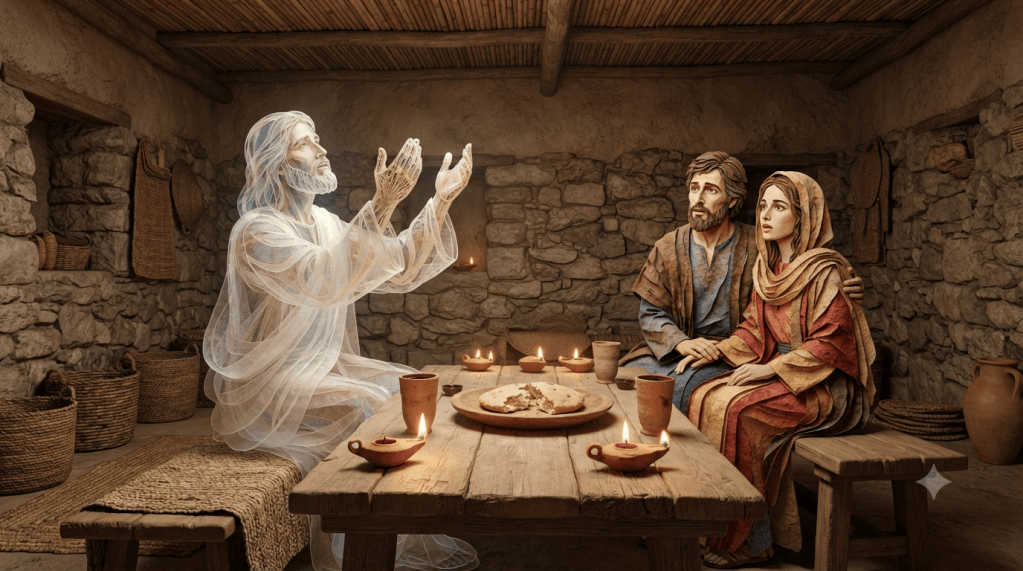
We need to stop here and ponder for a moment the magnitude of this statement, that reveals their state as ones that were oblivious to their own condition, being engaged in a form of religion that does not bear the examination of faith, but only serves to falsely supplicate unto death. So, when the Lord identified the issues of this church, He said, they are naked, in reference to the sin of Adam, meaning they are still in the flesh. As a result they neither have the garment of righteousness, nor do they have the opening of the eye that helps them to understand spiritual truths. As Paul says, “But whenever one shall have turned to the Lord, the veil is taken away.” 2 Corinthians 3 verse 16. The main point is that the members of the church of Laodiceans were fenced in, and did not even realise the truth of God was shut out from the midst of them. In that, Christ was not dwelling in their midst, for which reason He says to them, “Behold, I stand at the door and knock. If anyone should hear My voice and open the door, then I will come in to him and will dine with him, and he with Me.” Revelation 3 verse 20. The one and only factor that is meant to identify this church as Christians was lacking from their midst, yet they are listed among the Seven Churches of the Gentiles. [John 14 veres 23.]
A religion that is practiced in the flesh being bound in all manner of Laws, does not have the privilege of having Christ dwelling in them. For which reason the Lord says to them, “I know your works, that you are neither cold nor hot. I wish you would be cold or hot. So because you are lukewarm, and neither hot nor cold, I am about to spit you out of My mouth.” Revelation 3 verses 15 to 16. The commonly accepted interpretation for being lukewarm is someone who is not fervent in the practice of faith, one who is one foot in, while the other is out. However, this does not explain the fact that this church was not even saved, since they were wretched, miserable, poor, blind, and naked, and Christ was not even dwelling in the midst of them, all of which is evidence of one who is not even born again. Meaning, whatever manner of works they seek to engage themselves in, be it fervent or otherwise is of no consequence. [Matthew 7 verses 21 to 23.] In which regard Dr. Michael Brown and Pastor Joseph Prince, both pointed out the fact that the Lord by saying, “I wish you would be cold or hot,” was revealing that lukewarmness is not meant to explain spiritual fervency. Since, it does not make sense for the Lord to say, “I wish you were cold as a fish and living in the world.” But rather, the Lord pointed to the fact that they are neither cold as the Covenant of Law written on stone under which Israel served, nor are they burning with the fervency of the Spirit of the New Covenant written on a heart of flesh, since both Covenants were used to serve the purposes of God according to the dispensation. However, this church has settled into a ritual of religious formality of the Grace of God, which they defined and implemented through the formality of manmade laws, as a result they are neither for one nor the other, and have ended up estranging themselves from God.
So, the Church of the Laodiceans were Christians by name only, and for everything else that is of consequence, they were counted as part of the world and in the flesh. The name Laodiceans means “people rule,” and as their name suggests, the members of this church are formed according to national and family heritage, being funnelled to the practice of faith according to the dictates of culture and traditional rituals determined by the denomination. As a result the members have not been given the opportunity to invite Christ into their hearts, which they all have taken for granted. And this is an extremely dangerous place to be, because we have been fooled to worship God in the flesh according to laws that are set by mankind, when Christianity is all about the living reality of Christ dwelling in us. Meaning, the members are told what they are, and it is not something that they knew from within themselves. Worst of all we might even be tempted to compare ourselves against those in the world, and supplicate ourselves for the few laws we have kept, and the fervency of our religious rituals. The point is that all of us need to stop and ask ourselves the question, if Christ indeed dwells in our hearts? The Evangelist John Bevere says, “The problem with deception is that you do not know you are deceived.” Now, if we were talking about any other religion in the world, people being told what they are according to their culture, tradition and custom, in identification of ethnicity and all manner of fleshly classification, it would be acceptable, but this does not and cannot apply to Christianity. Unlike every other religion in the world that is practised in the flesh, only Christianity is practised in the Spirit, as Paul said, “Now you are not in flesh but in Spirit, if indeed the Spirit of God dwells in you; but if anyone does not have the Spirit of Christ, he is not of Him.” Romans 8 verse 9.
Whether we like it or not, Christianity is either practised in the flesh or Spirit. If it is in the flesh the end is destruction even though they know of the name of the Lord, and that was the condition of the Laodicean Church. So the witness of the Spirit is a crucial aspect of our faith. Paul writes, “The Spirit Himself bears witness with our spirit that we are children of God.” Romans 8 verse 16. John also repeatedly affirms to us the validity of this truth, saying, “And by this we know that He abides in us: by the Spirit whom He has given to us.” 1 John 3 verse 24. As well as in 1 John 4 verse 13. And John puts more emphasis on the response of God towards us, than the witness we have received from men, and says, “If we receive the testimony of men, the testimony of God is greater. For this is the testimony of God that He has testified concerning His Son. The one believing in the Son of God has the testimony in himself.” 1 John 5 verses 9 to 10. Please note, God Himself testifying! In which regard the Lord said, “When the Helper comes, whom I will send to you from the Father, the Spirit of truth who goes forth from the Father, He will bear witness concerning Me. And you also bear witness, because you are with Me from the beginning.” John 15 verses 26 to 27. We can see here the Lord made a clear distinction between the witness of the Holy Spirit, and that of His disciples. Likewise, Paul also made a similar point, saying, “And my message and my preaching were not in persuasive words of wisdom, but in demonstration of the Spirit and of power, so that your faith might not be in the wisdom of men, but in the power of God.” 1 Corinthians 2 verses 4 to 5. These are the fundamental truths by which we are to examine ourselves. Salvation is not some play on words, it is a subject of eternal importance, for which reason God Himself validates this truth in us, and has not just left it to the testimony of men.
Now, the realization of this fact may come in various ways, but the common way it is experienced by believers is in respect to Peace, Love, and Joy. The Lord said, “Peace I leave with you; My peace I give to you. Not as the world gives do I give to you. Let not your heart be troubled, nor let it fear.” John 14 verse 27. And again, “These things I have spoken to you, that My joy may be in you and your joy may be full.” John 15 verse 11. And again, “And I made known to them Your name, and will make it known, so that the love with which You loved Me may be in them, and I in them.” John 17 verse 26. As well as in Romans 5 verse 5. And Paul encapsulates all these and says, “For the kingdom of God is not eating and drinking, but righteousness and peace and joy in the Holy Spirit.” Romans 14 verse 17. So we can see that the presence of the Holy Spirit as an aspect of Christ dwelling in us, is always and without fail accompanied by Peace, Joy and Love.
And the reality of having the Spirit of God to dwell in us comes with the opening of our eyes so that we may perceive spiritual truths, as the Lord said, “But the Helper, the Holy Spirit, whom the Father will send in My name, He will teach you all things and will bring to your remembrance all things that I have said to you.” John 14 verse 26. And again, “But when He, the Spirit of truth, shall come, He will guide you into all the truth.” John 16 verse 13. John also says, “And you, the anointing that you received from Him abides in you, and you have no need that anyone should teach you. But just as the same anointing teaches you concerning all things and is true and is no lie, and just as it has taught you, you shall abide in Him.” 1 John 2 verse 27. Likewise, Paul also clearly describes the purpose for which the Holy Spirit have come, and says, “Now we have not received the spirit of the world, but the Spirit from God, that we may know the things having been granted to us by God, which also we speak, not in words taught of human wisdom, but in those taught of the Spirit, communicating spiritual things by spiritual means.” 1 Corinthians 2 verses 12 to 13. It is important to realise the Holy Spirit is called the Helper, meaning what we receive from Him is inevitably determined by what we are willing to learn from Him. The Lord said, “Ask and it will be given to you; seek and you will find; knock and it will be opened unto you. For everyone asking receives; and the one seeking finds; and to the one knocking, it will be opened.” Matthew 7 verses 7 to 8. The counterpart of this statement is that, if we approach Him thinking we know it all, having set our minds that we have need of nothing, then that is exactly what we will receive from Him, nothing. God does not force us, He always invites us, as such the Humility of our pursuit is an important factor, as David said, “He guides the humble ones in justice, and He teaches the humble ones His way.” Psalm 25 verse 9.
Once again, it is worth it for us to stop and ponder the magnitude of the charge the Lord laid against the Church of Laodiceans, by saying, “they did not even realise.” All because they lacked the humility to pursue the truth. And no one has sought to exhort them to examine themselves, and no one has told them the reality of Christ dwelling in them is the entire purpose of the Christian faith. And how this truth is meant to affect the way we think and live. The main point we want to emphasise is that when the Christian faith is practiced in the flesh, the members are easily susceptible to all manner of destructive theologies. Because the truth of Christianity is not based on fleshly knowledge, it is not the formality of laws that are dictated to the flesh, nor is it a cover for the deceptive desires of the sinful flesh. Christianity is built upon the reality of the flesh having been put to death with Christ. As Paul says, “Now those of Christ Jesus have crucified the flesh with its passions and desires.” Galatians 5 verse 24. This fact is meant to be as certain to us as the reality of Christ having died and having been buried. As Paul says, “Or are you unaware that as many as have been baptized into Christ Jesus have been baptized into His death? Therefore we were buried with Him through baptism into death, so that, just as Christ was raised up out from the dead by the glory of the Father, so we also should walk in newness of life.” Romans 6 verses 3 to 4. Meaning, in the new life we are to live in Christ, there is no room to make allowances for sin, there is no room for identifying ourselves according to the dictates of our dead and buried sinful-flesh, and there is no room for the practice of faith according to fleshly ordinances.
So, how is it that we keep falling into the same error, again and again? As much the importance of being born again is emphasised in parts of the Body of Christ, we say in parts, because even this fundamental truth is not even taught in great portions of the Body. Nonetheless, the entire body seems to be tight lipped when it comes to declaring the certainty of the death of sinful-flesh, as if the failure to walk perfectly in this truth invalidates its reality. That is, even in the cases that we have understood the importance of being born again, we are made to stumble in part because we have not fully grasped the importance of death in this process. And the consequences of our failure to grasp the death of our sinful-flesh have even resulted in some to elevate the struggle to subdue the desires of the sinful-flesh, as if it is some spiritual badge, not realising they are fighting a battle that is already won. As such, we exalt the strength of mankind, giving no place for the Holy Spirit who longs to cast the burden from our shoulders. Struggling not to commit sin is definitely not a virtue, in fact it is evidence of one that has not come to the realisation of the truth of the Cross of Christ, and is still in the flesh. However, having no desire to sin with no effort on our part, this indeed is the truth of the Spirit. [Hebrews 10 verses 1 to 3.] The Covenant of Grace counts entirely on the strength of God, and never on the strength of mankind. [Ephesians 6 verses 10 to 11.]
So, the person that seeks to accept the state of our sinful flesh, and the one that seeks to bind it with laws, suffer from the same problem. And one of the main culprits that has allowed such thinking to fester within the Church is the doctrine of spiritual death, which blurs the issues that are related to spirit and body. The problem with this doctrine is not that it failed to identify the problem, but where it placed the blame. In that, if we do not know where we have come from, how are we to know where we are to go? If we do not know all that is won in Christ, how can we possibly stand in it? Now, without going into extensive details, the main issue has to do with identifying whether Adam died spiritually or physically, when he ate from the tree of the knowledge of good and evil. The simple fact of the matter is that, Paul wrote, “For of the Law being powerless in that it was weak through the flesh, God, having sent His Son in likeness of sin of flesh and for sin, condemned sin in the flesh.” Romans 8 verse 3. Here, Paul answered our dilemma in one simple statement, in that he recognised Jesus Christ did not come in the likeness of the spiritually dead, but in the likeness of sinful flesh, being made subject to our death. [Hebrews 2 verses 9, & 14.] And in Hebrews, Paul says, “Therefore it behoved Him to be made like the brothers in all things, so that He might become a merciful and faithful high priest in things relating to God, in order to make propitiation for the sins of the people.” Hebrews 2 verse 17. Paul encapsulates the reason the Lord came in the likeness of sinful flesh is to condemn sin in the flesh. That is to say, the Lord destroyed sin by giving His body over to death on our behalf. And nowhere in this exchange does Paul bring up the spiritual state of mankind. Mankind did not fail to keep the Law of God on the account of spiritual blindness, or spiritual death, but the fact of the weakness that dwelt in our flesh. Which Paul sought to explain to us, that weakness is in fact sin dwelling in our body, saying, “And in that case I am no longer doing it, but the sin dwelling in me. For I know that there dwells in me nothing good, that is, in my flesh. For to will is present with me, but not to do good.” Romans 7 verses 17 to 18.
Then the question becomes, what does this mean to us? What implication does the Lord’s bodily death have to do with the state of the weakness of our sinful flesh? Simply put, how does His bodily death affect our own body? Now, the fact that we are still living in this mortal flesh, we have taken to mean His death does not directly apply to our body but to our spirit, since we have attributed the original failure of Adam to the spirit rather than the body. However, we have to recognise the fact that Christ did not die spiritually on the Cross, and at no point has He ever said, “I am giving My Spirit unto death.” But He did say, “I am the living bread, having come down from heaven. If anyone shall have eaten of this bread, he will live to the age. And also, the bread that I will give for the life of the world is My flesh.” John 6 verse 51. Christ gave over His body because the failure of Adam was according to the body, not the spirit, and this is the simplicity of the Redemption of God. Here it is important to address the misapplication of the judgment of God as it relates to the sin of Adam, that is the idea, God’s punishment of Adam even reaches down to the depth of Hades to the torment of the souls of mankind. This is a great error! God said to Adam, “Cursed is the ground on your account, in toil you shall eat of it all the days of your life, and thorn and thistle it will cause to grow for you, and you shall eat the vegetation of the field. By the sweat of your nose you shall eat bread, until your returning to the ground, for from it you were taken. For dust you are, and to dust you shall return.” Genesis 3 verses 17 to 20. Nowhere in this statement did God subject the soul of mankind to the torment of the depth of Hades, absolutely nothing! Adam sinned in the flesh, and he reaped the judgment of toil and sweat, until the day his body gave out in order to return to the dust, and that was all!
The Prophetess Jennifer Le-Clair pointed out that when Christ was on the cross bearing the sin of the entire world, He said, “It has been finished.” John 19 verse 30. That is to say, at that very point, Christ had borne all the judgment that was ever pronounced against Adam. However, the residual effect of the error of the doctrine of spiritual death tries to carry His punishment even to the depth of the earth. But Christ did not enter Hades in order to be subject to the torment of demons whom He has overcome by His death, as Paul says, “Through His death He might destroy the one holding the power of death, that is, the devil.” Hebrews 2 verse 14. That is to say, the very death of the Lord Jesus Christ according to the body is the actual victory. And Peter gives us the reason the Lord entered Hades saying, “[Christ] having been made alive in the spirit, in which also having gone, He preached to the spirits in prison.” 1 Peter 3 verse 19. As well as in 1 Peter 4 verse 6. So, Christ entered Hades for one purpose, that is He may preach the gospel to those that were dead, as the Lord Himself said, “Do not marvel at this, for an hour is coming in which all those in the tombs will hear His voice, and will come forth— those having done good to the resurrection of life, and those having done evil to the resurrection of judgment.” John 5 verses 28 to 29. And His victory was illustrated when He led the captives from their captivity in a procession of victory to the dismay of the spiritual hosts of wickedness that had held their soul hostage. Therefore, Paul says, “For the love of Christ compels us, having concluded this, that One has died for all, therefore all have died. And He died for all that those living no longer should live to themselves, but to the One having died for them and having been raised again.” 2 Corinthians 5 verses 14 to 15. So, the death of the Lord has nothing to do with spiritual death, but is entirely aimed at addressing the bodily death to which we are all subject, as Paul says, “For as indeed in Adam all die, so also in Christ all will be made alive.” 1 Corinthians 15 verse 22. Paul wanted us to know that, as sure as the body of all of mankind was made subject to death through Adam, likewise the body of all mankind will be brought back to life in Christ.
And Paul explains the significance of the Lord’s bodily death to be applicable to us who are in the body, and says, “For that which He died, He died to sin once for all; but that which He lives, He lives to God. So also you, consider yourselves to be dead indeed to sin, but living to God in Christ Jesus.” Romans 6 verses 10 to 11. Likewise Peter also says, “Who Himself bore our sins in His body on the tree, so that, [we] having been dead to sins, we might live to righteousness. “By whose scourge marks you have been healed.” 1 Peter 2 verse 24. The answer to the question we have asked earlier is that, the Lord’s bodily death directly applies to our own body, as Paul says, “For the one having died has been freed from sin.” Romans 6 verse 7. Please note, this is not some sudo illusion of freedom, but the declaration of our utter victory having been released from the bonds of sin. And this is where many of us seek to restrain ourselves from making such claims, on the account we dwell in a world that is ruled by sin. So, we try to explain it away by saying, it is the old dead spirit that died with Christ, rather than the truth that we died bodily with Him on the cross. Truely, if our death with Christ on the cross is meant to be spiritually, then water baptism does not make sense, and it would have served no purpose. We have to remember the reason we bury our body in water with Him is on the account we also have died with Him bodily on the cross. In that, our sinful body that went into the water with Christ is meant to be raised up as a mortal flesh. Mortal, because it is still subject to death, however it is no longer under the dominion of sin.
On the account of which, God, who did not expect any of us to overcome sinful-flesh in recognising the weakness that dwelt in us, now says, “Therefore do not let sin reign in your mortal body, in order to obey its desires.” Romans 6 verse 12. It is important to bear in mind, the power we are to live in the body is by the Spirit of God. Nonetheless, Paul wants us to be established in the fact our body is delivered from sin, through death with Christ. And this is the point of significance, the Death of the Lord is applied to break the sceptre of darkness, that is sin. But the manner we are to live this life for righteousness, in a world that is ruled by sin is through the power of God. The main point is for us to understand the death of the Lord is intended to cleanse our soul, as well as to set our body free from the bondages of sin. And our failure to recognise the latter part is the reason we seek to make accommodation for our flesh. We seek to recognise people by their sexual orientation as if we are not delivered from sinful-flesh. We apply the blood to cleanse our soul, but neglect the significance of the water to wash our body. So in our bid to accommodate failure we have twisted the truth of God, and have created a doctrine of pristine spirit, and a murky body.
We have to understand the knowledge of the death of our sinful-flesh in Christ, is just as important as knowing His life of righteousness that is lived in us through the Holy Spirit. Through which we are able to gain a complete picture of what it means to be born again, not a disjointed one. Meaning, our complete freedom from the bondages of sin is just as important for the life of righteousness we are to live in Him. In that, our birth as a new creation in the Spirit is built upon the death of the flesh. As Peter said of the Lord’s death. “Christ also suffered once for sins, the righteous for the unrighteous, so that He might bring you to God, having been put to death indeed in the flesh, but having been made alive in the Spirit.” 1 Peter 3 verse 18. For which reason when Paul made the point that, “One has died for all, therefore all have died,” he confirms the merit of this statement by saying, “Therefore from now, we regard no one according to the flesh. Even though we have regarded Christ according to flesh, yet now we regard Him thus no longer. Therefore if anyone is in Christ, he is a new creation.” 2 Corinthians 5 verses 16 to 17. When Paul says, “we have regarded Christ according to flesh,” he is not saying we knew Christ according to sinful-flesh, since there is no sin in Him, but according to the natural state as we ourselves are natural. And it is this form of existence which Christ put to death in His body. Meaning, our state as a new creation is entirely based upon the fact we have died bodily with Christ. So on the Cross of Christ, Sin was put away, thereby the Law was made null and void, and our existence as flesh was brought to an end.
And John describes the complete salvation of God saying, “This is the One having come by water and blood, Jesus Christ; not by water only, but by water and by blood. And the Spirit is the One testifying, because the Spirit is the truth. For there are three bearing testimony: the Spirit and the Water and the Blood—and these are three in one.” 1 John 5 verses 6 to 8. Now, Water is meant to be a reference for the flesh, as Paul said, “Since the children have partaken of blood and of flesh, He also likewise took part in the same things.” Hebrews 2 verse 14. So, when John says, Jesus came by water and blood, he is saying, Jesus came in flesh and blood. Therefore, when he now says, there are Three that testify, he is referring to the elements that make up mankind, which is spirit, soul, and body. The Holy Spirit testifies to our spirit we are sons of God, Romans 8 verse 14. The Blood testifies our soul is cleansed from evil conscience, Hebrews 9 verse 14. And the water testifies our body is set free from sin, Romans 6 verse 3 to 4. In this regard, Paul says, “We should draw near with a sincere heart, in full assurance of faith, our hearts having been sprinkled clean from an evil conscience and our body having been washed with pure water.” Hebrews 10 verse 22. So, every aspect of the make-up of mankind is meant to testify our utter complete deliverance from sin, in order for us to live for righteousness in the newness of the Spirit in Him. [1 Peter 2 verse 24.]
It is on this basis the Lord now attributes blamelessness, not only to our spirit, but to our soul and body, as Paul says, “Now may the God of peace Himself sanctify you completely, and may your Spirit, and Soul, and Body be preserved, entirely blameless at the coming of our Lord Jesus Christ. The One calling you is faithful, who also will do it.” 1 Thessalonians 5 verses 23 to 24. Please note, Paul makes no distinction between the spirit and body, in that, our body is meant to be sustained entirely blameless in the same manner as our spirit. And the reason he gives why this is possible is the fact that it is God Himself by His Holy Spirit that is able to do so. So, when Paul speaks of the expectation God has for our bodies, he always without fail makes mention of the Holy Spirit, Romans 8 verses 11 to 13, 1 Corinthians 3 verses 16 to 17, 1 Corinthians 6 verses 11, & 18 to 19, Galatians 5 verse 16, 1 Thessalonians 4 verses 3 to 8, Titus 2 verses 11 to 14, Titus 3 verses 3 to 5. In each instance, the Holy Spirit is described as One who washes and sanctifies our body. We have to understand that our body is kept in honour not by our own effort, but in realising the truth it is the Holy Spirit who does so. Now, even though our conscience is cleansed, yet our mind needs renewing according to the will of God. Likewise, even though our body is set free from sin, habits may need to be broken, but this is meant to be obtained by faith in the knowledge of the truth, that is by the Word and Spirit. As Paul said, “Christ also loved the church and gave Himself up for her, so that He might sanctify her, having cleansed her by the washing of water by the word, so that He might present to Himself the church in glory, not having spot or wrinkle or any of the such things, but that it would be holy and blameless.” Ephesians 5 verses 25 to 27. We have to understand what we believe will affect the manner we live.
So, our failure when it comes to this foundational doctrine is the main issue, be it those that are misled to practice faith in the flesh according to Laws, in the likeness of the Laodiceans, or those that twist the Grace of God as an opportunity for lewdness of the flesh. We have to understand, the only way the power of sin can be broken from us is through death. This is the gateway! It is not just the forgiveness of sins which we committed when we were ignorant of the things of God, but utter deliverance from that state of sinful-flesh in which we lived. Consider, Israel came out of Egypt through the blood of the lamb, and Moses declared to them at the crossing of the Red Sea, saying, “Do not be afraid. Stand still and see the salvation of the LORD, which He will do for you today; for the Egyptians whom you see today, you shall see never again, unto eternity.” Exodus 14 verse 13. Consider the magnitude of this statement, in that, Israel that was under bondage of slavery to the Egyptians for four hundred years, has now been set free once and for all, as to never see their captors again. So, through the blood of the lamb their soul was set free from the destroyer of the firstborn, but their body was freed from the bondage of slavery at the Red Sea. The slavery of Israel at the hands of the Egyptians is an analogy for the bondage of sin into which all of mankind is born, but we are delivered from this state by the Blood of the Lord Jesus Christ in the sanctification of our soul, in order to pass from death to life. However, our body is set free from the captivity of sin, when we are buried with Him through Water Baptism. So, in the likeness of Israel’s freedom from slavery, we also may declare Sin has no dominion over us.
Now, we know how Israel was set free once and for all, nevertheless we find many instances when they sought to go back into bondage of the slavery of Egypt. Think of it, freedmen were longing for the days of their captivity. And this is the condition which we find in the majority of the Church of God, when we seek to accommodate sin to be part of their body. Not one Israelite in the camp beyond the Red Sea, would have identified themselves as slaves, yet that is exactly what we do! Here, it is important to point out that, there are parts of the Body of Christ who are in the likeness of Laodiceans, those who were never given the opportunity to invite Christ into their lives, and through customs and traditions have even been denied the opportunity of water baptism, through rituals of Baby Christenings. As such, these churches are inevitably always trapped in the worship of God through fleshly ordinances, through many Laws that govern the practice of worship, much more complex than the Book of Leviticus. The ministers of such churches are almost always adorned in all manner of vestments, with holy articles for ministry such as cups, plates, and tables, accompanied by all manner of procession and body movements. The places of worship are adorned with all manner of statues, and candles and incense, all of which are intended to tantalise the senses, but without exception it is empty of spiritual truths. The main purpose of business in these churches is always Sin. It is bought and it is sold, but freedom from it is never declared. So, the members are kept in a perpetual state of sin and forgiveness, constantly hoodwinked into making restitution for something that is freely given to the whole world in Christ. And such transactions for Sins, makes the Grace of the Lord Jesus Christ in the forgiveness of sins to be in vain. Grace cannot and will not accept payment, and any effort to do so will invalidate it. As Paul said, “And if by grace, it is no longer from works; otherwise grace no longer would be grace.” Romans 11 verse 6.
And because faith is practice in the flesh, all manner of destructive doctrines are easily able to creep in through deceptive spirits, as Paul said to Timothy, “But the Spirit expressly states that in later times some will depart from the faith, giving heed to deceitful spirits and teachings of demons, in the hypocrisy of liars, having been seared in the own conscience, forbidding to marry, commanding to abstain from foods that God created for reception with thanksgiving by the faithful and those knowing the truth.” 1 Timothy 4 verses 1 to 3. And in Colossians he says, “Therefore let no one judge you in regard to food, or in regard to drink, or in regard to a feast, or a New Moon, or Sabbaths, which are a shadow the things coming. But the body is of Christ. Let no one disqualify you, delighting in humility and the worship of the angels, detailing what he has seen, being puffed up vainly by his mind of the flesh, and not holding fast to the head.” Colossians 2 verses 16 to 19. Paul is making the point, these seek to implement regulations which are according to the flesh as to exert a false sense of humility, but his conclusion is that, “which having indeed an appearance of wisdom in self-imposed worship and humility and harsh treatment of the body, are not of any value against the indulgence of the flesh.” Colossians 2 verse 23. That is to say, whatever self-imposed religious restraints they seek to place on their body, avails nothing, because it is still under the dominion of sin. And have been deceived to stand against the divine institutions which God Himself established, such as marriage. That is, any fleshly effort to beautify sinful-flesh through all manner of sacrifice and flagellation, will absolutely mean nothing. [Isaiah 64 verse 6.]
And a faith that is practiced in such a state of fleshly laws, will be misled to the worship of other elements, such as angels, under deceptive terminologies of offerings and prayers, while stealing the hearts of the members away from the Grace of God, to the intercessions of supposed holy men and women. [Revelation 19 verse 10, & Revelation 22 verses 8 to 9.] We can search the Bible from cover to cover, and we will not find a single incident of prayers being offered to anyone but God. Not a single one! Yet a person who is in the flesh can easily be deceived, and under the expression of false humility, as if God has distanced Himself from us, offers such prayers in defiance, to the provocation of God. It is important to bear in mind, Paul expresses the severity of such practices, saying, “Let no one disqualify you.” The undeniable fact of the Christian faith is that it cannot be understood according to the natural mind. So, we may argue with one another until we are blue in the face, however if we do not take into consideration this fundamental issue, it is to no avail. That is, a person who is fleshly minded will find it very difficult to accept spiritual truths, if not impossible. That is why the question of examining ourselves is of vital importance. Remember, the accusation against the Laodiceans was that they did not even realise. Now, we made some remarks in respect to the manner these churches practice faith. This is not intended as a disrespect in any way, but through recognition of what constitutes fleshly worship, we might have cause for the examination of ourselves, and be provoked to the pursuit of faith in the Spirit.
The Last point we want to make about Laodiceans type churches is that their beginning was in the Spirit like that of the other churches. Remember, Paul is the one that established the Church of Laodiceans, as he said to the Colossians, “And when the letter shall be read among you, cause that it may be read also in the church of the Laodiceans, and that you also may read the one from Laodicea.” Colossians 4 verse 16. So, their beginning was in the Gospel of the Grace of God. Nonetheless, like the Galatians that were knocked off the path in order to set their hopes on fleshly laws through the doctrine of circumcision, likewise the Laodiceans have also allowed such destructive doctrines to creep in. So the failure of the fathers in failing to contend for the truth of the Gospel has become a trap for their children. [Galatians 2 verses 4 to 5.] As a result the children have been deceived to the practice of faith in the flesh, through all manner of religious rituals. In that, a simple seed of the doctrine of circumcision can grow into all manner of fleshly man-made laws, even to emulate the Laws under which Israel served, from the priestly garments, to candles and incense that are burnt. On which account the Lord calls them Lukewarm, that is having the likeness of Law in one, and the Cross of Christ on the other, yet without God.
So, the simple answer for such a condition is to acknowledge the basics of the Faith of Jesus Christ. Remember, the Lord’s solution to the church of Laodiceans is that, “Behold, I stand at the door and knock. If anyone should hear My voice and open the door, then I will come in to him and will dine with him, and he with Me.” Revelation 3 verse 20. We have to be careful not to despise this simple invitation of the Lord, it is not to be taken for granted, since it holds eternal consequences. And Paul wants us to recognise the importance of the starting point of our faith and says, “If you have died with Christ.” That is to say, our death in the flesh in respect to Sin and Law, through the acknowledgment of the sacrifice of the Lord Jesus Christ, which is the entry point of the faith. That is why our life with Christ begins when we are raised from Water Baptism. [Romans 6 verses 4 to 6, & Colossians 2 verses 11 to 12.] And no one can take this step for us! Water Baptism is meant to be an answer of good conscience toward God, not the good conscience of our parents, nor that of godfathers and mothers, but our own. [1 Peter 3 verse 21.]
The next condition we will address in this study is as it relates to those that have grasped the concept of grace when it comes to the forgiveness of sins, however they have not understood the significance of the body that is crucified with Christ with its passions and desires. And the failure of these types of churches is that they have taken the inheritance of the kingdom of God for granted. The important thing for us to recognise is that a church that started in the Spirit can be misled to the practice of faith in capitulation to the dictates of the flesh, and be led into destruction. We need to consider the warning given to the Galatians, Paul said, “Are you so foolish? Having begun in the Spirit, are you now being perfected in the flesh? Did you suffer so many things in vain, if indeed also in vain?” Galatians 3 verses 3 to 4. Now, we do understand the letter to the Galatians is addressing those that seek to practice faith according to Law. Nonetheless, the point of significance is that one that started in the Spirit, can be moved to the practice of faith in vain on the account of destructive doctrines.
And this is the point which Peter was addressing when he wrote, saying, “For speaking arrogant words of vanity, they entice to sensuality with the passions of the flesh those barely escaping from those living in error, promising them freedom, themselves being slaves of corruption. For by what anyone has been subdued, by that also he is enslaved. For if, having escaped the pollutions of the world through the knowledge of the Lord and Savior Jesus Christ, now again having been entangled in these they are subdued, the last state has become worse to them than the first.” 2 Peter 2 verses 18 to 20. We know with all certainty these have begun in the Spirit, since they have come out of the world through the knowledge of the Lord, which is the same attribution which Paul made to the Galatians, saying, “O foolish Galatians! Who has bewitched you, before whose eyes Jesus Christ was publicly portrayed as having been crucified?” Galatians 3 verse 1. So, while the Galatians were deceived into the practice of Law in the flesh, the ones Peter is addressing were deceived into the practice of fleshly passions, through which their end was worse than their beginning.
And in the very next chapter, Peter gives the reason why these people found themselves in this condition, saying, “Just as our beloved brother Paul also wrote to you according to the wisdom having been given to him, as also in all the letters, speaking in them concerning these things, among which some things are difficult to be understood, which the ignorant and unestablished distort to their own destruction, as also the other Scriptures.” 2 Peter 3 verses 15 to 16. Now, if we can encapsulate the ministry of Paul in simple words, it would be the expositions of the Covenant of the Grace of God. So, when Peter says they have misunderstood his writings to the point of destroying themselves, he is specifically speaking about the doctrine of Grace. Likewise, Jude also addresses how a Christian that came out of the world through the knowledge of the Lord Jesus Christ can be misled to the practice of life in sensuality and sin, saying, “For certain men came in stealthily, those having been designated long ago unto this condemnation, ungodly ones changing the grace of our God into sensuality and denying our only master and Lord, Jesus Christ.” Jude 1 verse 4. And those that fall into the trap of these deceptive doctrines, giving no heed to correction, will inevitably end up searing their conscience, from which there is no turning back. [Hebrews 6 verses 4 to 6.] In which regard the Lord admonished the messenger of the church of Sardis, on account of his failure to hold fast to the gospel of truth, as a result many of his members were made to stumble and defile their garments to the loss of their inheritance. [Revelation 3 verses 1 to 5.]
So the question we need to ask is, why did they fail? The point is they believe in the Grace of God when it comes to the forgiveness of sins, but they have failed to understand the Grace of God when it comes to the conduct of our body. Specifically when it comes to the main concept of our study that is the reality of our flesh having been crucified with Christ with its passions and desires. The best chapter that explains this condition is Paul’s letter to the Corinthians when he described Israel in the midst of the wilderness of Sinai. He first describes to us how they came out of Egypt led by Moses and passed through the Red Sea, and how they ate spiritual food and drank spiritual drink. Then he says, “Nevertheless, God was not well pleased with most of them, for they were strewn in the wilderness. Now these things have become types to us, for us not to be desirers of evil things, as they also desired. Neither are you to be idolaters, as some of them, as it has been written: “The people sat down to eat and to drink, and rose up to play.” Neither should we commit sexual immorality, as some of them committed sexual immorality, and twentythree thousand fell in one day. Neither should we test the Christ, as some of them tested, and were destroyed by serpents. Neither are you to grumble, as some of them grumbled, and perished by the Destroyer.” 1 Corinthians 10 verses 5 to 10. Now, by saying they have become types to us, Paul is making the point that there is an important point we are to learn from their experience. Meaning, if their failure does not at all correspond to our own, then that statement would be meaningless.
The error of these Israelites was that even though they rejoiced in their deliverance from slavery in crossing the Red Sea, they faltered when it came to crossing the Jordan River. And this is the problem that faces the majority of the Church of God, especially those that have understood the Grace of God in the forgiveness of sins, which they erroneously assumed to be the only condition for the inheritance of the Kingdom of God. However, they have not understood that Israel crossing the Red Sea is meant to be an illustration for coming out of the kingdom of darkness that ruled in sin. The Sea is an illustration for the dominion of spiritual hosts of wickedness. That is why Christ’s victory over death is described as triumphing over them. [Colossians 2 verses 14 to 15, 1 Corinthians 2 verse 7 to 8.] However, the land of Milk and Honey was not in the wilderness of Sinai, but beyond the Jordan River. And in order to cross the Jordan River, Israel had to learn to walk with the Ark of God in their midst. And for us, this means to have Christ dwelling in our hearts through the Holy Spirit. [Ephesians 3 verse 17.] So, while the Blood of the Lord Jesus Christ allowed us to escape the kingdom of Darkness, it is the Holy Spirit who is tasked to bring us into the kingdom of God, for those that learn to walk with Him. And without Him, the Jordan will NOT open, for which reason Paul asked the vital question saying, “examine yourselves.”
And it is in regard to the analogy of Israel that fell in the wilderness that Paul gives a stern warning to us, saying, “Therefore the one thinking to stand, let him take heed, lest he fall.” 1 Corinthians 10 verse 12. And the context he uses to explain its application to us is in respect to those that continued to eat and drink in an idol’s temple. So Paul asks, “Or do we provoke the Lord to jealousy? Are we stronger than He?” [verse 22.] The point being they were over confident in the practice of things from which they were set free in Christ. And we can apply this principle against every charge that is laid against Israel. To be desirers of evil things means, the craving to satisfy the flesh in respect to what it was accustomed to when we were in the world and in sin. Idolatry is expressed in terms of eating, drinking, and playing, that is to say the pursuit of the things of the world. An idol is something we hold in our hearts, which we esteem to be greater than the pursuit of God. As such it is closely associated with covetousness, because we desire for ourselves something someone else has. Sexual immorality is self-evident.
To Tempt Christ, has to do with the limit we place on God by determining for ourselves what God is willing or not willing to do. The end of which is the rejection of what God has made available, in preference to a worldly system. In that, they despised the Manna, the provision of God by desiring the food of Egypt. So Psalms speaking on this concept says, “Because they did not have faith in God, and they did not trust in His salvation.” Psalms 78 verse 22. So, when we say, does God heal or deliver, that is exactly what we are doing. And the answer God gave to Moses, when the fiery serpents came in the midst of Israel was to make an image of a fiery serpent and to set it on the pole, so that all who looked at the pole may live. [Numbers 21 verses 4 to 9.] The serpent on the pole is meant to be a reminder for us, of all that is achieved through the Cross of Christ on the day of Passover. The effective working of which is illustrated in the present, through the bread of communion given for the healing of our body. And it is this concept which Paul addressed in 1 Corinthians 11 verses 27 to 30, when the Corinthians failed to discern the Lord’s body in the breaking of Bread, as a result they were weak, sickly, and some fell asleep, fiery serpents. [Matthew 9 verses 5 to 6, & Isaiah 33 verse 24.] Last of all, it is the grumblers, this is in respect to those that rebel against the order which God has set in place by His own authority. Such as those that claim there are no Apostles or Prophets, or healing ministers, in direct contradiction to 1 Corinthians 12 verse 28. Or those that denigrate a minister on the basis of sex.
Now, we are sure Paul could have addressed each category and its direct application to us as he did with the practice of eating in an idol’s temple. Nonetheless, the point is each category has to do with failing to understand the flesh is dead, and the reality of our spiritual walk, hence we allow for deceptive doctrines. Such as doctrines that recognise the perfection of our spirit in Christ, but deem the waywardness of the body to be permissible, and without consequence. Paul said, “Now the works of the flesh are evident, which are sexual immorality, impurity, sensuality, idolatry, sorcery, enmities, strife, jealousy, outbursts of anger, contentions, dissensions, factions, envyings, drunkennesses, carousing, and things like these, as to which I forewarn you, even as I warned before, that those doing such things will not inherit God’s kingdom.” Galatians 5 verses 19 to 21. And then he says, “Now those of Christ Jesus have crucified the flesh with its passions and desires.” [verse 24.] The main concept he wanted us to be assured of is the fact that the flesh is dead with Christ, as such all these other practices which we once took delight in when we were in the world, should have no dominion over us. So Peter also says, “The one having suffered in the flesh is done with sin, so as to live the remaining time in the flesh no longer to men’s desires, but to the will of God.” 1 Peter 4 verses 1 to 2. The suffering Peter is referring to is in respect to the suffering of Christ, meaning knowing we have died with Him in order to be set free from sin. [Romans 6 verse 7.]
So, when Paul encounters believers that live life to the neglect of this truth, to the desire and dictate of their flesh, he says, “For many are walking—of whom I have told you often and now I say even weeping—as enemies of the Cross of Christ, whose end is destruction, whose God is the belly and glory is in their shame, those minding earthly things.” Philippians 3 verses 18 to 19. Please note, they are enemies of the Cross of Christ, because they live for the dictates of the body, hence Paul says, “whose God is the belly.” Meaning, they live life to the satisfaction of the passion and desire of their flesh, which makes them contrary to the Cross. The very thing they count on to justify their actions, they have become an enemy of. In that, when they look at the Cross of Christ they see the Blood in the forgiveness of sins, but they fail to recognise the Body that testifies to them they are set free from sin. And their end is not some ambiguous religious term, but destruction. As much as the Cross of Christ is a testimony for the forgiveness of our sins, it is also a representation of our complete freedom from sin, and we are expected to walk in it. So, when believers identify themselves according to the whims of their old sinful-flesh, and continue in the practice of such things, they are in fact being contrary to the cross.
The extreme push to normalise sexual immorality in the world seeks to conform our mind according to the course of the world. If we believe this is the way we are created then we will not seek to change it, nor do we want to. So we will try to shape the Gospel to fit our dictates and desires, to the worship of God in the flesh that benefits us nothing. And have become like those who fell in the wilderness at the gates of the Promised Land. So it is on account of the wrangling of words to accommodate our sinful flesh, which Paul warns, saying, “Do not be deceived with empty words,” the practice of such things will lead to destruction, and there can be no inheritance. [1 Corinthians 6 verses 9 to 10, Ephesians 5 verses 3 to 7.] John also pointing out the importance of the manner we conduct life in the world says, “Anyone having been born of God does not practise sin, because His seed abides in him, and he is not able to continue sinning, because he has been born of God. Through this, the children of God and the children of the devil are manifest: anyone not practising righteousness is not of God, and also the one not loving his brother.” 1 John 3 verses 9 to 10. [1 John 3 verse 7 to 8.] Many have sought to understand the emphatic statement which John is making, in regard to not being able to continue sinning, by drawing a distinction between the spirit and body.
However, the practice of righteousness has an apparent outcome, Paul writes, “But now, having been set free from sin, and having become slaves to God, you have your fruit unto sanctification, and the end is eternal life.” Romans 6 verse 22. Earlier Paul had said, “Grace might reign through righteousness, unto eternal life through Jesus Christ our Lord.” Romans 5 verse 21. So, when Paul says Grace might reign through righteousness, unto eternal life, the intended meaning is on the account of the fruit of sanctification. In that, when Paul said, “where sin abounded, grace overabounded,” what we have to understand is the power of God that is made available to us that far exceeds the depth of sin under which we were trapped, in order to set us free. [Titus 2 verses 11 to 14.] The important point for us to realise is that, for Grace to reign through Righteousness it is entirely intended for the purpose of producing the fruit of Sanctification. Now, by saying Grace reigns through righteousness, this means the practice of righteousness is not some set of laws we implement by which we judge the manner we live. The Lord said to Paul, “the Gentiles to whom I am sending you, to open their eyes, that they may turn from darkness to light, and from the power of Satan to God, that they may receive forgiveness of sins and an inheritance among those having been Sanctified by Faith in Me.” Acts 26 verses 17 to 19. Now, by saying sanctification is by faith, the Lord is revealing to us it is the work of the Spirit being exhibited in our body, not something we modify ourselves. The Holy Spirit works by Grace through Faith in the knowledge of Truth.
So, it is important for us to know what Sanctification means, which Paul defines, saying, “For this is the will of God, your sanctification: You are to abstain from sexual immorality; each of you to know how to win mastery over his own vessel in holiness and honor, not in the passion of lust, as also the Gentiles, not knowing God;” Then he says, “For God has not called us to impurity, but into holiness. So then, the one rejecting this does not disregard man but God, the One also giving His Holy Spirit to you.” 1 Thessalonians 4 verses 3 to 5, & 7 to 8. Meaning, the measurable effect of sanctification has to do in the manner we hold our body in honour, which is in the conduct of our life. Be it in respect to fleeing from sexual immorality as stated in 1 Corinthians 6 verse 18, or from idolatrous practices as stated 1 Corinthians 10 verse 14. In that, whatever condition that seeks to hold our body to the habits of the old life, the answer always comes down to recognising the reality of the flesh having died with Christ, and the effect of the power of the Holy Spirit that works in us in the present.
Paul said, “For if you live according to flesh, you are about to die; but if by the Spirit you put to death the deeds of the body, you will live.” Romans 8 verse 13. Please note, the answer to all the problems and difficulties of the Christian walk is summed up in the words, “by the Spirit.” In that, if it is by the Spirit of God, it is not something we do to subject our own body, but what is done for us on the account we have believed the truth of God. Grace works through righteousness, meaning both factors are gifts from God, but there is an expectation for us to believe the truth and persist in it. And this solution is given in contrast to those that live for the flesh, to the destruction of themselves. And Paul summarises the intended purpose of God in saving us from sin, saying, “That God has chosen you from the beginning unto salvation in the sanctification of the Spirit, and by faith of the truth; to this also He called you through our gospel to the obtaining of the glory of our Lord Jesus Christ.” 2 Thessalonians 2 verses 13 to 14. Please note, the most important point these types of churches need to realise is that Salvation is a product of Sanctification!
There is Grace in the Blood, in the forgiveness of sins to escape from the kingdom of darkness. And there is Grace in the Spirit in the sanctification of our walk leading to our inheritance. Sanctification is the power of God working in us, according to what we believe. [Ephesians 1 verses 18 to 19.] As we have said, Sanctification is by Faith, this means we have to know the truth of the promises of God for the Spirit to be effective in us. As the Lord said, “Sanctify them by the truth; Your word is truth. As You sent Me into the world, I also sent them into the world; and for them I sanctify Myself, that they also may be sanctified in truth.” John 17 verses 17 to 19. So, the sanctification process can simply be explained as taking on the divine nature through the promises of God. [2 Peter 1 verses 3 to 4, & Ephesians 4 verses 24.] That is the manifestation of the life of Jesus in our mortal bodies, through the knowledge of Him.
So, when John says, “And everyone having this hope in Him purifies himself, just as He is pure.” 1 John 3 verse 3. He is revealing to us we have a part to play, not in some sort of self flagellation, or harshness to the body, but in the pursuit of the truth of the word of God. [Acts 20 verse 32, & Ephesians 5 verses 26 to 27.] The Spirit is the one that sanctifies us, and He does so by bearing witness to the truth of the Word of God we believe. So, in the cases where what is taught contradicts the truth of God, there is no washing, and there is no fruit of sanctification. Simply put, sanctification is proof of righteousness, it is the distinguishing feature between those who worship in the flesh, and those who do in the Spirit. Paul said to the Corinthians, “And some of you were such. But you were washed, but you were sanctified, but you were justified, in the name of the Lord Jesus Christ and by the Spirit of our God.” 1 Corinthians 6 verses 11. The point is there is an evident change that takes place in us be it small or great, one thing is true, we are no longer what we were before on the account of the Spirit of God dwelling in us.
Redemption is the forgiveness of Sin, through which we come out of the kingdom of darkness we were subjected to, through Adam. But righteousness is the imputation of the life of Jesus Christ, that is of the Spirit, to the production of the fruit of Sanctification for the purpose of the inheritance of the kingdom of God. Isaiah said, “Behold, I lay for a foundation in Zion a stone, a stone tested, a precious cornerstone, a sure foundation. One believing will not be in haste. And I will make justice the measuring line, and righteousness the plumbline;” Isaiah 28 verses 16 to 17. In this statement Isaiah is revealing to us there are two types of measurements: the first is the measuring line that is used to measure justice, and it is used on the horizontal plain. In that, it is used to establish the foundation of faith, in Christ Crucified for the forgiveness of sins. As such any attempt to add, or take away from the simplicity of this truth will bear serious consequences, as Paul said, “For no one is able to lay another foundation, besides the one being already laid, which is Jesus Christ.” 1 Corinthians 3 verse 11. The Second measuring type is the plumbline, and this is used to measure the vertical plain, that is righteousness. And this is associated with the house we build, in respect to our walk according to the nature of God in us. And Paul describes the combination effect of these two measurements, saying, “For if, being enemies, we were reconciled to God through the death of His Son, much more, having been reconciled, shall we be saved in His life!” Romans 5 verse 10. Justice, that is justification is measured in the death of the Son of God, however righteousness is measured according to His Life.
The Gospel of Christ has aspects that have to do with coming out of the kingdom of darkness, and aspects that have to do with inheriting the Kingdom of God. And in this process the end is as crucial as the beginning. When John, Peter, and Paul wrote all the letters to believers, to those who made a profession of faith, and took part in water baptism, they did not question the fact they all have believed in Christ crucified for the forgiveness of sins. However, after careful examination of the manner some walked among them, they sought to exhort them to the expectation to walk by the Spirit free from sin. Not one of them made an exception for a believer to wallow in sin, in fact in some instances they sought grounds to cut fellowship with one who refused to heed correction. Paul the apostle of Grace said, “For what is it to me to judge those outside? Do you not judge those within? But God will judge those outside. “Expel the evil out from among yourselves.” 1 Corinthians 5 verses 12 to 13. Paul, like all the writers of the New Testaments, is making the point that a believer is not meant to live for the forgiveness of sins, but for righteousness by the Spirit. As Paul says, “Sober up righteously and do not sin, for some have ignorance of God. I speak to your shame.” 1 Corinthians 15 verse 34.
And this is where the majority of the Church of God seems to struggle, because we fail to distinguish the infant from the mature. The Lord said to Peter, “Feed My lambs, Shepherd My sheep, & Feed My sheep.” John 21 verses 15 to 17. The point the Lord was making is that there is an appropriate food that is given at different stages of development. Infants of the faith may be fed on the doctrine of the forgiveness of sins, but the sheep are meant to be fed on the word of righteousness, which they are expected to put to practice. As Paul says, “For everyone partaking of milk is unskilled in the word of righteousness, for he is an infant. But solid food is for the mature, the ones by constant use having trained the senses for distinguishing both good and evil.” Hebrews 5 verses 13 to 14. And maturity is expressed in the manner we are expected to hold our body in honour, knowing we are a dwelling place of God.
And Isaiah encapsulates the complete salvation of God and says, “Until the Spirit is poured upon us from on high and the wilderness becomes as a fertile field and the fertile field is considered as a forest. Then justice will settle down in the wilderness and righteousness will dwell in the fertile field. And the work of righteousness will be peace, and the labor of righteousness quiet and security even to forever.” Isaiah 32 verses 15 to 17. Justice, that is Christ Crucified is the means by which we come out of the barren world. But this is followed with the fruitfulness of Righteousness that exhibits the nature of God, on the account of which we have peace, quietness and assurance. And it is this distinction which a great majority of the Church fail to recognise, when we give heed to the measuring line, that is the Cross of Christ, but utterly disregard the plumbline of righteousness, that is the Spirit, and without the Spirit, there is no inheritance! It may sound strange, but we fall short of the kingdom of God when we are focused on the forgiveness of sins, and disregard the reality of the Spirit of God for righteousness in order to produce the fruit of Sanctification. And it is precisely this point the question of examining ourselves is intended to address.
When we think of the Church, the image that comes to our mind is the Cross, in that, from coast to coast and sea to sea, Christians everywhere identify with the death of the Lord. However, when the Lord spoke to John, the symbol He used to represent the Seven churches is not the cross, but the Lampstand, as John writes, “The mystery of the seven stars, which you saw on My right hand, and the seven golden lampstands: The seven stars are the angels of the seven churches, and the seven lampstands are the seven churches.” Revelation 1 verse 20. And He later defined the Lampstand as the Seven Spirits of God in Revelation 3 verse 1. The most important point this imagery is meant to portray to us is that the Church is meant to be known by His Life, that is the Holy Spirit. In that, the identification of the Christian faith is meant to be determined in the reality of Christ dwelling in us. Paul wrote, “Likewise, my brothers, you also have been put to death to the Law through the body of Christ, for you to belong to another, to the One having been raised out from the dead, so that we should bear fruit to God.” Romans 7 verse 4. As such, the Cross of Christ is meant to be a symbol for the death of the flesh, through which we come out of the world, however the Church, being the bride of Christ, is meant to belong to Him who is raised from the dead in the expression of His Life. And it is this distinction which many fail to realize.
To the world, to those beyond the Red Sea, and in the land of captivity, the emblem that is held up high is the Cross, as Paul says, “For I decided to know nothing among you except Jesus Christ and Him having been crucified.” 1 Corinthians 2 verse 2. However, to the Church, it is Christ in you, the hope of glory. We have to remember, the Church was born on the day Pentecost, in Acts 2, which is the day the Lord the Holy Spirit made His dwelling in the first believers. In the same manner Judaism was also born on the day of Pentecost at the foot of Mount Sinai. The point is this should give us a moment of pause, not according to what we think, but what He has chosen to reveal to us about His Bride. So, when the Lord said to the five foolish virgins, “Truly I say to you, I do not know you,” He is revealing to us, they have known Him according to the Cross, that is the flesh, but not according to the Spirit. The inheritance of the kingdom of God is determined by His Spirit, for those who have learned to walk in Him.
The Spirit Himself bears witness within ourselves, and a change of life is manifested in the expression of that truth. And that change is not of our making, but the response of God to a genuine saving faith. It is not about feeling, but the reality of having the witness of God. And it comes with Peace, Love, Joy, and the desire for the things of God. We have made the verification of faith to be something to shy away from, as if it is counter to faith. That is why we do not want to ask that question? As if God will fail in His duty to bear witness. We have received the witness that is from men, should we not receive the witness that is from God? We do ourselves and others great harm when we advocate a religion without power, which lacks the response of an assurance of faith from God! As such, modern Christianity has relegated the response of God as having no bearing. We have made Christianity to be of the will of man, and not of God. John says, “But as many as received Him, He gave to them authority to be children of God—to those believing in His name, who were born not of blood, nor of will of flesh, nor of will of man, but of God.” John 1 verses 12 to 13. The point is, we have a tendency to blinker ourselves by turning away from the truth of God, and seeking solace in tradition, in customs, and cultural affinity, and this will prove to our own destruction. The exhortation to examine ourselves is not intended to stir up doubt, but to raise assurance. When Paul discovered the perilous state of the Galatians, he endeavoured to declare to them the truth of God with one view in mind, as he says, “My children, of whom I travail again until that Christ shall have been formed in you.” Galatians 4 verse 19. Meaning, there is still time for correction, but it takes an honest examination of ourselves.


Leave a comment